Balanced Funds in Turkey: Why the World's Most Volatile Rate Market Breaks the 60/40 Model
The classic balanced fund rests on a premise that equities and bonds are negatively correlated. In Turkey, that premise does not hold. The result is a fund category that barely exists, and a structural challenge that no allocation model has convincingly solved.
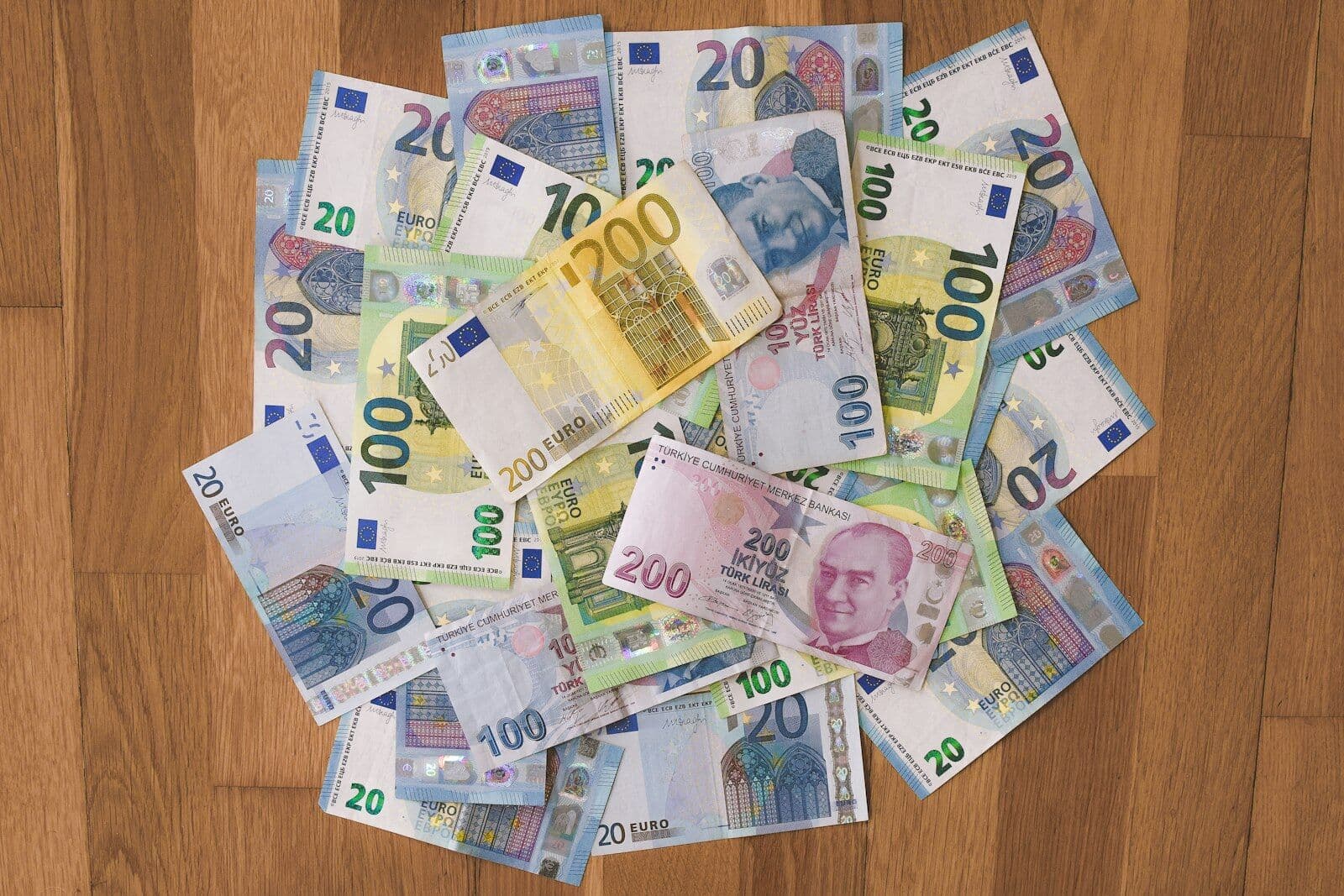
The classic balanced fund, as conceived in the American and European markets where the modern asset management industry developed, rests on a simple premise: equities and bonds are negatively correlated in most market environments, so holding both produces a smoother return stream than holding either alone. The canonical expression of this is the 60/40 portfolio (60% equities, 40% bonds), which has delivered strong risk-adjusted returns for most of the past half-century in developed markets.
Turkey breaks this model. It breaks it so thoroughly that balanced funds, as a category, barely exist in the Turkish mutual fund market. Out of more than 800 funds listed on the TEFAS platform, the number that genuinely blend equities and bonds in a balanced allocation can be counted on one hand. The few that exist are largely confined to the pension system, where automatic enrolment programs require default fund options. This scarcity is not a historical accident. It is the market's verdict on a structural problem that no fund manager in Turkey has convincingly solved.
The Problem: Positive Correlation in a High-Rate Environment
In most developed markets over the past two decades, equities and bonds have been negatively correlated: when stocks fall, government bonds rally, and the combined portfolio draws down less than either asset alone. Research suggests that this negative correlation has actually been the exception rather than the rule over long historical periods, with positive stock-bond correlation being the norm for the majority of years in modern financial history. But the negative correlation regime that prevailed from roughly 2000 to 2020 in developed markets is the environment in which the modern balanced fund became a standard product.
Turkey has never experienced this regime in a sustained or reliable way. The relationship between equities and bonds in Turkey is driven less by the business cycle dynamics that produce negative correlation in developed markets and more by sovereign credit perception and inflation expectations. Research in the Financial Analysts Journal has found that for emerging markets, government creditworthiness is a bigger driver of stock-bond correlation than inflation or real rates. When a government is perceived as riskier, both equities and bonds fall together, destroying the diversification benefit that balanced funds depend on.
Turkey's rate environment amplifies this. When the Central Bank of Turkey held its policy rate at 24% in late 2018 following the currency crisis, government bonds yielded around 27% and money market funds returned roughly 24%. In that environment, equities had to deliver returns well above 30% just to compensate investors for the additional risk of equity ownership. Most years, they did not. When the Central Bank cut rates sharply in 2021 and 2022, moving the policy rate from 19% down to 8.5% in a policy experiment that most economists considered poorly designed, equities surged while bonds repriced downward. A fund holding a static 60/40 allocation would have been perpetually behind the appropriate positioning, underweighting whichever asset class was benefiting from the current regime and overweighting whichever was suffering.
The numbers illustrate the volatility of the rate environment. From September 2018 to January 2026, Turkey's policy rate moved from 24% down to 8.5%, back up to 50%, and then back down to 37%. That is a round-trip of over 4,000 basis points in under eight years. No developed market has experienced anything comparable. A balanced fund's fixed allocation framework was not designed for this kind of regime instability.
What Exists on TEFAS
The scarcity of balanced funds on TEFAS is itself the most telling data point. The funds that do exist in this space tend to fall into a few categories.
The first is "karma fon" (mixed fund), a classification that sounds like a balanced fund but is not. Most of the karma funds available on TEFAS are thematic sector funds (renewable energy, electric vehicles, healthcare, blockchain technology) that happen to invest in a mix of equities and debt within a narrow sector. They carry high risk ratings (typically 6 out of 7) and are equity-heavy. They are not the classic multi-asset balanced approach.
The second is "dengeli fon sepeti" (balanced fund basket), a fund-of-funds structure that achieves balanced allocation by investing in other funds rather than holding stocks and bonds directly. The largest of these is a product managed by one of Turkey's biggest asset managers, with several hundred million TL in assets. The fund-of-funds approach has the advantage of flexibility but adds a layer of fees.
The third, and by far the largest category, sits within the pension system. Turkey's automatic enrolment pension program (OKS), launched in 2017, and the older voluntary private pension system (BES) both require balanced variable fund options as defaults. These "dengeli degisken" (balanced variable) pension funds are where most of Turkey's balanced fund assets actually reside. They exist because regulation requires them, not because investors have freely chosen them in an open market.
Why Dynamic Allocation Has Not Solved the Problem
The obvious response to Turkey's unstable equity-bond relationship is dynamic allocation: shifting the portfolio's mix based on the rate environment rather than maintaining a fixed split. When real rates are positive, overweight bonds; when real rates are negative, overweight equities. This is conceptually sound and several Turkish fund managers have attempted it in various forms.
The difficulty is practical. Turkey's rate environment does not move in orderly, predictable cycles. The Central Bank's decision-making has, at various points, been influenced by political considerations that no quantitative model can reliably anticipate. The surprise firing of a central bank governor in March 2021, the unconventional rate cuts that followed, and the abrupt reversal to orthodoxy after the 2023 elections are regime changes that a model trained on historical data would not have predicted. A dynamic allocation approach that relies on the real policy rate as a signal works well when rate changes follow economic logic. It fails when rate changes follow political logic, which in Turkey happens frequently enough to undermine the strategy's reliability.
The result is that balanced funds in Turkey face a structural disadvantage regardless of whether they use static or dynamic allocation. Static allocation is perpetually mispositioned in a volatile rate environment. Dynamic allocation requires predicting regime changes that are often political rather than economic. Neither approach has produced a convincing, repeatable long-term track record in Turkey.
The Fee Question
Turkey's balanced funds that do exist tend to charge fees comparable to active equity funds, typically between 1.5% and 3% annually. For a fund category that, in developed markets, is increasingly available through low-cost index products at 0.1% to 0.3%, this pricing reflects the active management required to navigate Turkey's rate environment. But it also creates a high performance hurdle. A balanced fund charging 2.5% annually must generate at least that much in excess return over a simple strategy of splitting capital between a money market fund and a BIST100 tracker ETF. In Turkey's high nominal return environment, this is achievable in some years but difficult to sustain consistently.
The comparison with money market funds is particularly challenging. When the policy rate reached 50% in 2024, money market funds delivered close to that yield with minimal risk. A balanced fund that holds equities alongside bonds must justify the additional volatility and drawdown risk against a risk-free alternative that is already yielding at levels that would be considered extraordinary in any developed market. This is the fundamental commercial challenge: in high-rate environments, balanced funds compete not against other multi-asset strategies but against the risk-free rate, and in Turkey, the risk-free rate is often formidable.
What This Means for Turkish Investors
The near-absence of balanced funds from Turkey's voluntary investment market is not a gap waiting to be filled. It is a signal. The structural conditions that make balanced funds work in developed markets (stable negative equity-bond correlation, predictable monetary policy, moderate nominal rate levels) do not exist in Turkey. They have not existed for as long as Turkey's modern fund industry has been operational, and there is no credible near-term path to their emergence.
For Turkish investors seeking multi-asset diversification, the practical alternatives are less elegant but more honest. A self-managed split between a money market fund and an equity fund, adjusted periodically based on one's own assessment of the rate environment, achieves the same functional outcome as a balanced fund without the management fee. The pension system's balanced funds serve a useful purpose for default enrolment participants who would otherwise make no allocation decision at all. For everyone else, the market's message is clear: in Turkey, balance is a goal you manage yourself, not a product you can buy.
Fonkuşu
Fonkuşu is an independent publication covering Turkey's fund industry, fintech ecosystem, and capital markets. We accept no payment from subjects of our reporting.
See an error? Submit a correction.